Showing posts with label display. Show all posts

Wednesday, 2 May 2012

Combining design with design constraints


The winning formula for retail design

I was wondering only last week if there was actually a winning formula for retail design. A visually appealing and versatile retail space which does the best selling job on your products. Is there a recipe?


  • 1 heaped tablespoon of layout algorithms
  • 5 oz. of artistic flair
  • 1 pinch of current modern trend


Mix it all together is some fancy water front design studio in central London, et voila.

The key clearly lies in getting the right architect and designer who can really communicate and inspire over your brand image, but that's not the end of it.

Countless studies into people flow, what makes an appealing store front and how to take your customers on a visual journey across your threshold, all contribute to the final design. You can't decide you need more shelves, put some up (that you got cheap from a repossession auction) then think, "I know, some blue lights under these shelves would look great". Creating what I like to call Frankenstein's monster - the complete lack of a comprehensive design plan.

Clearly, it is not practical for every retailer to invest thousands in brand image and shop fitting, especially in the current economic climate. You have to make the most of what you spend in terms of versatility and longevity and quite often you end up going with the 'safe bet' multi-purpose shelving and plastic lean back sign holders. But that doesn't have to be bland if you you keep these rules in the back of your mind:

1. Keep it simple but bold

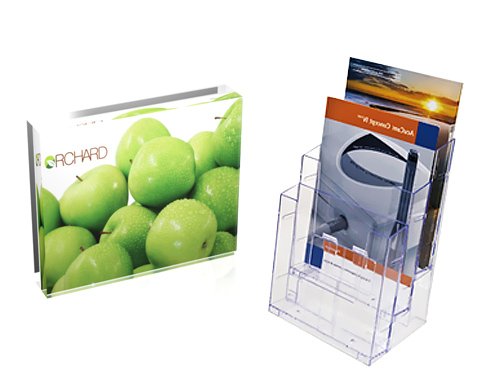
If you are going to put a sign somewhere, make sure your customers see it, read it and appreciate the relevance. You can do very effectively with acrylic display blocks which provide versatile, modern and clean displays. They are double sided and can be used in portrait or landscape.

2. Don't play all your cards at once

Maintain some mystery about what's in your shop, especially from the outside. With their screens all aligned so they're not facing outside, it makes passers by wonder 'what are they looking at?' which draws people inside. You can apply the same logic by not overcrowding your shop window and giving hints as to the more interesting things inside. 


3. High contrast

Interior contrast refers to much more than just colour and shade. Large or small, smooth or sharp, flat or textured, messy (organic) or refined. All these things can bring a shop to life. 

Remember, you only get a small window of opportunity to wow your customers so there's no point making your shop look the same from every direction. This actually can be a god send in terms of making your shop look amazing as well as being a practical environment to showcase your products (which, lets be honest, is the whole point). 

You can get away with having a 'bland' wall full of square, uniform shelving if you contrast it with something organic and curved - a stand out centerpiece which draws customers in. If you've ever been in Hollister shop, you'll know what I mean: Light and dark, hard minimal shelving against soft colourful clothes, not to mention the amazing fragrance of their aftershaves which fills the air inside.


4. Serious about your brand

Even if you don't want your customers to think you take yourself too seriously that doesn't mean you can't be serious about your brand. A good approach is to always try to punch above your weight. Spend money on things that don't cost the earth but that are associated with larger companies. Voice-overs on your shop radio, Italian display stands and branded notice holders are a good way increase perception of your brand which can have a huge impact on repeat business.



Thursday, 22 March 2012

The Posterfix Revolution

Innovation in an unlikely place.

display your documents here

With the display solution marketplace flooded with all kinds of products, you wouldn't expect anything truly new for wall mounting signs, posters or any other document. Posterfix seem to have broken this rule by innovating such an elegant and practical solution it really leaves you wondering why you would ever use anything else!


Posterfix At Orchard


A SIMPLE ELEGANT SOLUTION


With simplicity at its heart, Posterfix makes displaying A5 / A4 / A3 / A2 / A1 / A0 posters in landscape or portrait so straightforward, neat and professional that almost any public, retail or corporate environment would benefit. Posterfix can be mounted on walls or windows in a matter of seconds with no need for sticky tape, staples, blue-tac or glue - its self adhesive strips secure it firmly to almost any flat clean surface but can be removed and even relocated at any time!


CLEAR TO SEE

Posterfix works great on windows as it allows you to create a double sided display with integrated branding which can be seen from either side. The perfect professional display solution for:

- RESTAURANTS
- ESTATE AGENTS
- TRAVEL AGENTS
- SUPERMARKET
- HIGH STREET RETAILERS


Information notice boards with integrated branding


INFORMATION POINTS

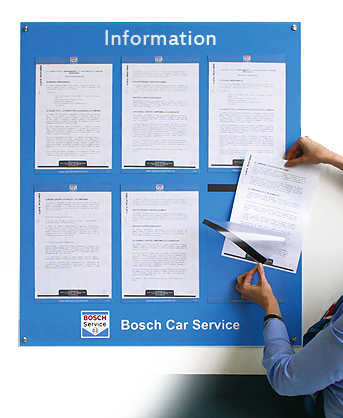
The possibilities with Posterfix are almost endless, but they really do come into their own in commercial environments where changeable  information needs displaying clearly and concisely. Posterfix can produce the complete information points - fully branded Posterfix notice boards without the drawing pins, sticky tape or staples!


Wednesday, 8 June 2011

The price of acrylic on the day .. smells fishy.

You've got to hand it to the far east; they know how to hike the price of acrylic.

For future reference you throw 3D televisions at the west faster than your average ninja hurls a shuriken, and Bob's your uncle - you get the uncontrollable desire to start melting any spare acrylic down into ingots and lock them away in a fire proof safe.

Oddly enough the 3D screens are not made from normal acrylic. They do, however, require huge amounts of the raw chemical used in acrylic manufacturing which has caused the world acrylic price to spike. This has placed unprecedented pressure on the companies in the acrylic display market as their customers expect the highest quality and the best price.

There are options, magnetic acrylic display blocks could become poly carbonate display blocks. Poly carbonate has very similar properties to acrylic - it comes in sheets and can be heat bent. The sudden shift to P/C could then effect the price of that too and then we'll be trying to use ice (which could work well in the frozen food industry).

Saturday, 4 June 2011

Enlighten me please.

There are some super slim light panels around, but when it comes down to how good they are, application is everything. Generally speaking there are two different types of light box:


LED light boxes
LED's provide the light. You can get both back lit and side / edge lit light boxes. The main advantage of this type of light box is that whiteness of the light can be regulated by the specification of tube you fit into them. Typically 5500k is classed as colour corrected which means that if you are trying to reproduce specific colour shades / tones, the light from the tubes will not distort what you can measure.


LED lit also produce a greater intensity of light which penetrates through paper up to 450gsm. It makes them the only sensible choice for designers or artist who are  looking for a tracing light box and really scrutinise the details in their work.


LED lit light boxes 
If you are looking to display artwork on an illuminated light panel then LED will be much more suitable. Designed for high efficiency and constant use they are a great way to catch the eye of a potential customer. However, without the light intensity of the tube lit light boxes, your artwork needs producing on a clear film / acetate.

There are LED light panels on the market which have been designed for simple tracing work, but if you don't have the right tool for the job it can leave you wanting.

Although there are slim light boxes available for design work, if you go too thin you end up with something which can only really be used for display purposes. Designers really benefit from the colour corrected light; something which you don't get from LED light panels so be wary when choosing a light box - make sure it's fit for purpose.