Showing posts with label design. Show all posts

Wednesday, 9 January 2013

Taking a Seat


TAKING A SEAT

For many years, designers from all corners of the world have tried to design a new type of chair. Innovation is incredible as they strive to stand out in a market which to call saturated would be an understatement. Every month I receive at least 2 'industry magazines' which in theory relate to all aspects of our market.


To glance through you would be forgiven to think that our market exclusively involved sitting down as you see advert for chair after chair after seat after stool after chair... you get the picture. In fact I often play a game where I try to get through the entire magazine (often 150+ pages) trying to spot a chair free spread!

'FX Magazine - The Business of Design' 

is a perfect example of an industry specific publication which my uncle (also in the furniture business) would call a 'chair mag'. In fact it was him that brought this phenomenon to my attention. 

That having been said, it's great to see what designers can come up with when forced to innovate. I suppose you could liken it to the music industry where some believe that it has 'all been done before' but every now and again you still get unique anthemic tracks which endure. When you get a fresh bright eyed young designer not constrained by conformity they design a completely new sitting down experience which quirky corporations decide would be perfect for their receptions. 


The Future of Sitting Down


You could think that in a few years we won't even recognise what it is to sit down any more, but ever since Ingvar Kamprad screwed the legs of his coffee table and invented IKEA, modern design has flourished and chair after chair after stool after chair have been created like there were a world shortage of places to sit. There's no sign that that will stop any time soon, and I guess old styles will simply get recycled just like bad pop records.

Recently we caved and thought that a funky chair would add a little variation to our otherwise highly utilitarian range of chairs. Primarily we supply chairs and stools for drawing boards which really have to be the epitome of practical, but as we discovered we can have our cake and eat it.

Someone out there has designed a space age chair with ergonomic and environmental credentials to sink a battle ship of pandas whilst still letting you actually sit down. Watch this:


Apparently this video wasn't even staged, this is actually what happens which you sit on a HAG Capisco drafting chair, but possibly you have to be ginger or wearing a wig. 

Wednesday, 20 June 2012

Wakefield Art Culture


WAKEFIELD CULTURE 
(historically an oxymoron)


Don't get me wrong, Wakefield has always been nice enough; sat in the heart of Yorkshire, surrounded by mining towns and countryside. Despite all that, it has always been the case that when someone asks where I'm from, I say 'Leeds'. Not just because most of the country knows where Leeds is, but because Wakefield has always been in its shadow, with nothing particularly to put it on the map.

However, in recent years the 'generic northern town (actually a city)' brush it has been tarnished with, has started to be shaken. The Hepworth Gallery, built in tribute to the world famous sculptor Barbra Hepworth, has made art and design enthusiasts all over the country stand up and take notice, with impressive foot-fall since it was opened over a year ago.


Yorkshire Sculpture Park

In turn the Yorkshire Sculpture Park (just outside Wakefield) has also seen renewed interest. The Park has always been well renowned for showcasing the county's best modern sculptors with inside and outside exhibitions. Championing Hepworth pieces has always been natural for the YSP, with a large collection of it's own.

At Orchard, we have been lucky. Situated where we are, if it wasn't for a few trees and a Homebase, we would be able to see the Hepworth in all it's glory from our office window.

Why not tie your visit to the Hepworth in with a quick coffee at Orchard. 

We can talk you through and demo any of our drawing boards, paper storage systems, light boxes or retail display equipment. We'll let you park here with only a 5 minute stroll down to the Hepworth! Perfect for a cultured day out in Wakefield .... near Leeds.


Wednesday, 9 May 2012

LED Light Tables - The Future is bright

Light Tables and LED Light Boxes

large light tables, floor standing light table

Design constraints always exist with light tables, but maybe the outlook is a little different. Typically the technology to create a large back-lit light table has always revolved around standard florescent tubes which provide the intensity and colour requirements for detailed design and plan review work.

ORCHARD have now developed the perfect LED light box solution which allows professional light boxes to be manufactured in almost any size or shape. A0, A1, A2 and A3 light boxes are obviously match the standard paper sizes for most design, art or photography applications, but our LED system allows our designers to think outside the box when developing a new light table - make the light area large enough to meet requirement, but why stop there?

The modern design studio is always looking to impress clients and create an inspirational environment for its employees. These types of breakthrough designs where practical viewing equipment is combined with stylish, designed and refined furniture provide the best of both worlds.

From minimalist to extravagant, Orchard can develop the right light table for the requirement.

Wednesday, 2 May 2012

Combining design with design constraints


The winning formula for retail design

I was wondering only last week if there was actually a winning formula for retail design. A visually appealing and versatile retail space which does the best selling job on your products. Is there a recipe?


  • 1 heaped tablespoon of layout algorithms
  • 5 oz. of artistic flair
  • 1 pinch of current modern trend


Mix it all together is some fancy water front design studio in central London, et voila.

The key clearly lies in getting the right architect and designer who can really communicate and inspire over your brand image, but that's not the end of it.

Countless studies into people flow, what makes an appealing store front and how to take your customers on a visual journey across your threshold, all contribute to the final design. You can't decide you need more shelves, put some up (that you got cheap from a repossession auction) then think, "I know, some blue lights under these shelves would look great". Creating what I like to call Frankenstein's monster - the complete lack of a comprehensive design plan.

Clearly, it is not practical for every retailer to invest thousands in brand image and shop fitting, especially in the current economic climate. You have to make the most of what you spend in terms of versatility and longevity and quite often you end up going with the 'safe bet' multi-purpose shelving and plastic lean back sign holders. But that doesn't have to be bland if you you keep these rules in the back of your mind:

1. Keep it simple but bold

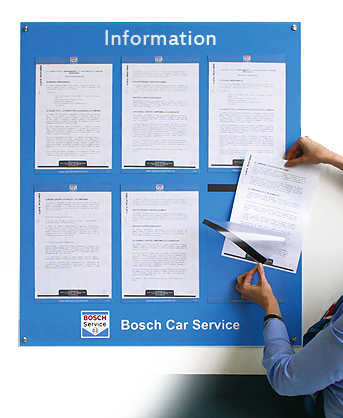
If you are going to put a sign somewhere, make sure your customers see it, read it and appreciate the relevance. You can do very effectively with acrylic display blocks which provide versatile, modern and clean displays. They are double sided and can be used in portrait or landscape.

2. Don't play all your cards at once

Maintain some mystery about what's in your shop, especially from the outside. With their screens all aligned so they're not facing outside, it makes passers by wonder 'what are they looking at?' which draws people inside. You can apply the same logic by not overcrowding your shop window and giving hints as to the more interesting things inside. 


3. High contrast

Interior contrast refers to much more than just colour and shade. Large or small, smooth or sharp, flat or textured, messy (organic) or refined. All these things can bring a shop to life. 

Remember, you only get a small window of opportunity to wow your customers so there's no point making your shop look the same from every direction. This actually can be a god send in terms of making your shop look amazing as well as being a practical environment to showcase your products (which, lets be honest, is the whole point). 

You can get away with having a 'bland' wall full of square, uniform shelving if you contrast it with something organic and curved - a stand out centerpiece which draws customers in. If you've ever been in Hollister shop, you'll know what I mean: Light and dark, hard minimal shelving against soft colourful clothes, not to mention the amazing fragrance of their aftershaves which fills the air inside.


4. Serious about your brand

Even if you don't want your customers to think you take yourself too seriously that doesn't mean you can't be serious about your brand. A good approach is to always try to punch above your weight. Spend money on things that don't cost the earth but that are associated with larger companies. Voice-overs on your shop radio, Italian display stands and branded notice holders are a good way increase perception of your brand which can have a huge impact on repeat business.


Wednesday, 4 May 2011

Back to the drawing board

The drawing office industry is vast, no doubt. Constantly evolving over the last century to keep up with the times; it's come a long way since the dawning of the humble drawing board; when man first took pencil to paper properly.


Back in the early 20th century it would have be hard to imagine where design technology would ultimately take our society. CAD (computer aided design) has pushed boundaries and opened limitless possibilities with what we can do with materials. This, coupled with the desire of designers to be remembered for their work, has produced impressive results over the whole spectrum of design.


The Seed Cathedral is one of my recent favorites for its bonkers brilliance. It displays a way of think about construction that questions conventions built up since man started arranging stones into wall shapes. But at the heart of all this development still remains that first idea, that initial scribble on the back of a crisp packet (which is really hard if you've ever tried it). The next step is the drawing board where the idea is given a chance to really flourish for the first time. That initial sketch lays out the basics of the concept and gets it out in the open for the first time.


Drawing boards help you thrash out an idea in a way that a computer program never could. And so, with even the most cutting edge technological advances, life still started out on a drawing board. Computers have tried to emulate what a drawing board can do with limited success - at the end of the day there really is no substitute for pencil and paper.


Ultimately, computers have the major role in modern design from building skyscrapers to space stations and it's likely it'll be that way from now on. "CAD" was born the first time a computer was used to replace that final stage of drafting a finished technical drawing. Maybe though, its simply that computers can never totally replace that initial design phase.


No matter what you are designing "CAD" is almost a given in this day and age, maybe we should change it to "DAD" (drawing aided design) and celebrate the drawing board and it's legacy that still lives on.