Wednesday, 9 May 2012

LED Light Tables - The Future is bright

Light Tables and LED Light Boxes

large light tables, floor standing light table

Design constraints always exist with light tables, but maybe the outlook is a little different. Typically the technology to create a large back-lit light table has always revolved around standard florescent tubes which provide the intensity and colour requirements for detailed design and plan review work.

ORCHARD have now developed the perfect LED light box solution which allows professional light boxes to be manufactured in almost any size or shape. A0, A1, A2 and A3 light boxes are obviously match the standard paper sizes for most design, art or photography applications, but our LED system allows our designers to think outside the box when developing a new light table - make the light area large enough to meet requirement, but why stop there?

The modern design studio is always looking to impress clients and create an inspirational environment for its employees. These types of breakthrough designs where practical viewing equipment is combined with stylish, designed and refined furniture provide the best of both worlds.

From minimalist to extravagant, Orchard can develop the right light table for the requirement.

Wednesday, 2 May 2012

Combining design with design constraints


The winning formula for retail design

I was wondering only last week if there was actually a winning formula for retail design. A visually appealing and versatile retail space which does the best selling job on your products. Is there a recipe?


  • 1 heaped tablespoon of layout algorithms
  • 5 oz. of artistic flair
  • 1 pinch of current modern trend


Mix it all together is some fancy water front design studio in central London, et voila.

The key clearly lies in getting the right architect and designer who can really communicate and inspire over your brand image, but that's not the end of it.

Countless studies into people flow, what makes an appealing store front and how to take your customers on a visual journey across your threshold, all contribute to the final design. You can't decide you need more shelves, put some up (that you got cheap from a repossession auction) then think, "I know, some blue lights under these shelves would look great". Creating what I like to call Frankenstein's monster - the complete lack of a comprehensive design plan.

Clearly, it is not practical for every retailer to invest thousands in brand image and shop fitting, especially in the current economic climate. You have to make the most of what you spend in terms of versatility and longevity and quite often you end up going with the 'safe bet' multi-purpose shelving and plastic lean back sign holders. But that doesn't have to be bland if you you keep these rules in the back of your mind:

1. Keep it simple but bold

If you are going to put a sign somewhere, make sure your customers see it, read it and appreciate the relevance. You can do very effectively with acrylic display blocks which provide versatile, modern and clean displays. They are double sided and can be used in portrait or landscape.

2. Don't play all your cards at once

Maintain some mystery about what's in your shop, especially from the outside. With their screens all aligned so they're not facing outside, it makes passers by wonder 'what are they looking at?' which draws people inside. You can apply the same logic by not overcrowding your shop window and giving hints as to the more interesting things inside. 


3. High contrast

Interior contrast refers to much more than just colour and shade. Large or small, smooth or sharp, flat or textured, messy (organic) or refined. All these things can bring a shop to life. 

Remember, you only get a small window of opportunity to wow your customers so there's no point making your shop look the same from every direction. This actually can be a god send in terms of making your shop look amazing as well as being a practical environment to showcase your products (which, lets be honest, is the whole point). 

You can get away with having a 'bland' wall full of square, uniform shelving if you contrast it with something organic and curved - a stand out centerpiece which draws customers in. If you've ever been in Hollister shop, you'll know what I mean: Light and dark, hard minimal shelving against soft colourful clothes, not to mention the amazing fragrance of their aftershaves which fills the air inside.


4. Serious about your brand

Even if you don't want your customers to think you take yourself too seriously that doesn't mean you can't be serious about your brand. A good approach is to always try to punch above your weight. Spend money on things that don't cost the earth but that are associated with larger companies. Voice-overs on your shop radio, Italian display stands and branded notice holders are a good way increase perception of your brand which can have a huge impact on repeat business.


Thursday, 22 March 2012

The Posterfix Revolution

Innovation in an unlikely place.

display your documents here

With the display solution marketplace flooded with all kinds of products, you wouldn't expect anything truly new for wall mounting signs, posters or any other document. Posterfix seem to have broken this rule by innovating such an elegant and practical solution it really leaves you wondering why you would ever use anything else!


Posterfix At Orchard


A SIMPLE ELEGANT SOLUTION


With simplicity at its heart, Posterfix makes displaying A5 / A4 / A3 / A2 / A1 / A0 posters in landscape or portrait so straightforward, neat and professional that almost any public, retail or corporate environment would benefit. Posterfix can be mounted on walls or windows in a matter of seconds with no need for sticky tape, staples, blue-tac or glue - its self adhesive strips secure it firmly to almost any flat clean surface but can be removed and even relocated at any time!


CLEAR TO SEE

Posterfix works great on windows as it allows you to create a double sided display with integrated branding which can be seen from either side. The perfect professional display solution for:

- RESTAURANTS
- ESTATE AGENTS
- TRAVEL AGENTS
- SUPERMARKET
- HIGH STREET RETAILERS


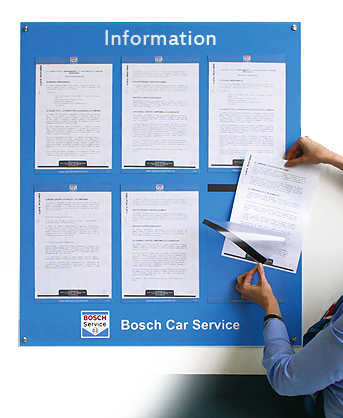
Information notice boards with integrated branding


INFORMATION POINTS

The possibilities with Posterfix are almost endless, but they really do come into their own in commercial environments where changeable  information needs displaying clearly and concisely. Posterfix can produce the complete information points - fully branded Posterfix notice boards without the drawing pins, sticky tape or staples!


Friday, 3 February 2012

The Future of Drawing Equipment

When I get chatting to someone in a Pub and the question of "What do you do for a living?" crops up, there is always a set sequence of events.

Firstly I tell them I work for a drawing board manufacturer. They either say "What? Pieces of wood?" or, if they are a little more worldly-wise "Drawing Boards? I didn't think people still used drawing boards?". I then proceed to tell them that both students and professional designers / architects all do indeed still use drawing boards and even though computers undoubtedly have their place, you still can't beat pencil and paper for getting ideas down.

So I was in the Cross Keys in Leeds last Wednesday night (Burns night) and there was a young lad working on his laptop at the bar. I couldn't see what was on his screen, but as I was ordering drinks I couldn't help notice his sketch book as he drew exotic and fancy profiles of buildings and interior layouts.

I couldn't help myself. "What are you working on?" at which point I noticed that sleep probably hadn't been on his agenda for quite some time. He was a third year architectural student called Tom studying in Leeds and was glad to show me his project; a rather striking building he was designing for his current assignment. He showed me his recent portfolio of sketches in his book - hundreds of lovingly drawn ideas from the basic to the sublime. Sketched, re-sketched, coloured and crossed out, this book represented the inner workings of his mind over the last year. On his screen was the half finished model with every detail from his sketch faithfully reproduced in wire frame.

"And what is it you do for a living?" he asked, sipping from his extra, extra black coffee.
"Ever heard of 'Orchard'?" I asked with a wry smile. He looked puzzled for a moment then suddenly remembering the name "we use Orchard drawing tables at Uni".
"That's us. We make them only a few miles away" I told him.
"No way? You actually make that stuff?"

It turns out his entire department is kitted out with Orchard drawing equipment and he uses it every day. What's more he loves using it and finds something very 'romantic' about drawing on paper. The cold hard machine that was his laptop was just a tool to him, a way of saving his ideas in 1's and 0's. His real love, his creativity, could only be released through paper and pencil and that was the reason he loved architecture.

Three years in to a seven year course he admitted that it is a long hard slog, but well worth the rewards at the end of it. To find yourself designing something which will actually get built. Knowing that you are in a position to create a visual impact on millions who see, live and work inside your creations for years to come.

He told me about the responsibility ahead of him. Medicine takes 5 years but you can only ever kill one person at once. Architecture takes so much longer because one mistake could have catastrophic consequences. I could see he was keen to get back to his work so with that I wished him well and left him to it.

I have to admit. Although I am a creative, I don't really know how to get the most out of a drawing board. Not like how Tom could at any rate. We make them, sell them then make some more knowing that the product is perfect for the job but not being able to do the 'job' ourselves.

We are organic beings, as much as we claim to know and understand computers they will always stifle basic creativity to some extent and so I see a bright future for the humble drawing board as the trusty companion for architects like Tom, designers and artists the world over.

Friday, 16 September 2011

Retail Display Sense

Having the space to spread your products far and wide can quite often produce excellent results in the retail world. Creating an airy sense of space and freedom. Making your customers feel less likely to get cornered by an employee.

In most shops however, this luxury of space is often at a premium. Having good retail display stands help to ensure you don't clutter your shop unnecessarily - displaying products in a clean, clear and efficient way can make all the difference when you are short on floor space. Magazine display towers and display racking with Italian styling and practical design is a good place to start. Check out http://awards.designweek.co.uk for some great inspiration.

Thursday, 8 September 2011

Keeping your office in shape

When it comes to plan filing choosing the right option can quite often be a minefield. Do you need horizontal paper storage or vertical paper storage? Do you need a lockable plan chest or a plan hanger stand? Metal or wooden? Bright and colourful or brown and beige straight from the 80's?

Despite the dreams of most architects to impose the perfect paperless office on us all, the reality is that most offices cannot escape it. Certainly large format plans and blueprints need to exist in a drawing office and so also need storing safely and neatly.


Most drawing offices tend to go down the route of plan holder systems as jobs can be grouped together into a single plan hanger. This is doubly useful for site offices where plans are readily needed on a building site.

Monday, 25 July 2011

Orchard Mirrors the Fashion World

Mirroring Fashion


As far as the world of fashion is concerned, if drawing boards do have their place then its only in the design studio. Last summer something extraordinary happened as drawing boards and fashion were brought together for a world class display of male suits in Somerset house in London.


Esquire Magazine led the drive to showcase 18 of the finest garments the worlds leading fashion houses and designers had to offer. Teamed up with major artist the goal was to create an artistic vision which demonstrated superb styling with an exquisite attention to detail. Each vision was then presented in full splendor next to a fully mirrored Orchard drawing board with polished chrome stand.


Granted, not all of the suits on display were practical, but the designers were able to let their artistic juices flow and catch the eye of the worlds media as the opening night was star studded with the likes of Graham Norton, Bonnie Wright & George Lamb.